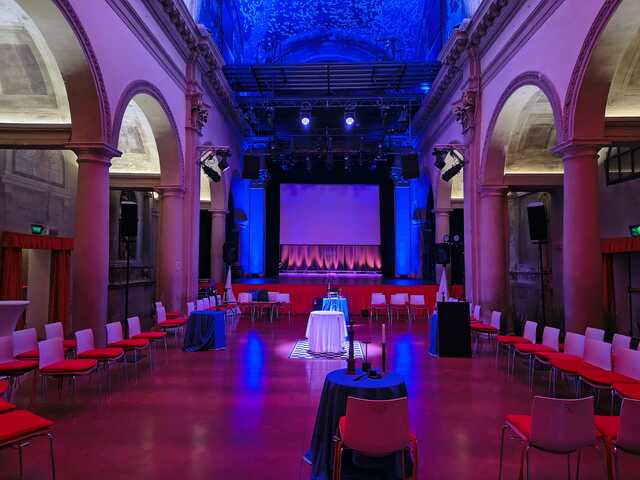
Il 12 settembre 2026, presso il Teatro Angelica in Bologna, è stata consacrata la Loggia “Josè Rizal n. 403” di Bologna.
La scelta del luogo ha conferito alla giornata un particolare senso di continuità. Il Teatro Angelica è uno spazio già caro ai Fratelli dell’Emilia-Romagna: ha infatti ospitato le ultime due Gran Logge Regionali ed è altresì il luogo nel quale la Loggia “Nettuno n. 292” di Bologna organizza annualmente la propria tradizionale “Ladies’ Night”. Uno spazio già testimone, dunque, di incontri, dialoghi e momenti di comunione fraterna è divenuto, per un giorno, il luogo nel quale una nuova Loggia ha ricevuto forma, nome e identità. Alla Cerimonia di Consacrazione hanno preso parte circa sessanta Fratelli. Numerosa la rappresentanza delle Logge dell’Emilia-Romagna, alla quale si sono aggiunti Fratelli giunti da altre regioni italiane, in particolare dal Piemonte, dalla Lombardia e dal Lazio. Ma la giornata bolognese ha assunto anche un significativo carattere internazionale. Accanto ai Fratelli italiani erano infatti presenti Fratelli appartenenti ad altre Grandi Logge, e nello specifico alla Gran Loggia Unita d’Inghilterra e alla Gran Loggia d’Irlanda. Irlandesi, inglesi, filippini e italiani si sono così ritrovati nel medesimo luogo, uniti da quella catena invisibile che permette a uomini provenienti da Paesi, lingue e tradizioni differenti di riconoscersi reciprocamente come Fratelli. Una presenza particolarmente significativa proprio nel giorno in cui veniva consacrata una Loggia posta sotto il nome di José Rizal, figura capace, per la propria storia, di richiamare naturalmente un orizzonte che oltrepassa i confini nazionali.
La Cerimonia di Consacrazione si è svolta con grande precisione rituale. L’Ufficiale Consacratore e il Direttore delle Cerimonie Consacratore hanno guidato i Lavori con competenza e sicurezza, scandendone i diversi momenti attraverso movimenti precisi e coordinati. In una cerimonia nella quale nulla dovrebbe essere affidato all’improvvisazione, l’accuratezza dell’esecuzione ha contribuito in maniera determinante a creare quel clima di ordine, raccoglimento e solennità che deve accompagnare la nascita di una nuova Loggia, perché nella ritualità massonica il gesto non costituisce un semplice accompagnamento alla parola: gesto e parola concorrono insieme alla costruzione simbolica dello spazio. La precisione del movimento, il rispetto dei tempi e l’armonia tra gli Ufficiali trasformano la Cerimonia in un Lavoro corale, nel quale ciascun Fratello è chiamato non soltanto ad assistere ma interiormente a partecipare.
Nel corso della Consacrazione, il Gran Maestro Regionale dell’Emilia-Romagna ha presentato e dato lettura della Bolla di Fondazione, l’atto attraverso il quale la nuova Loggia riceve formalmente il mandato di riunirsi e lavorare. Il documento rappresenta molto più della necessaria attestazione della nascita di una Loggia. La Bolla lega simbolicamente il presente al futuro: reca i nomi di coloro ai quali viene affidato il primo tratto del cammino, ma appartiene idealmente anche a quei Fratelli che un giorno siederanno tra le Colonne della Loggia senza aver conosciuto personalmente i suoi fondatori. Il nome della “José Rizal n. 403” è quindi entrato nella storia della Gran Loggia Regolare d’Italia.
Particolarmente significativo è stato il momento dedicato alla figura dell’uomo del quale la nuova Loggia porta il nome. Ai Fratelli presenti è stata proposta una profonda e dettagliata descrizione della figura di José Rizal, preparata attraverso un accurato lavoro di ricerca. Non un semplice richiamo nominale, dunque, ma il tentativo di comprendere le ragioni e il significato della scelta compiuta dai fondatori. La figura di Rizal è stata così posta idealmente al centro della nascente Loggia quale riferimento destinato ad accompagnarne il cammino. Portare il nome di un uomo significa, infatti, assumersi anche la responsabilità di interrogarsi sul significato della sua eredità e sui valori che quel nome è chiamato a evocare nei Lavori futuri. Terminata la Cerimonia di Consacrazione, la riunione è proseguita con un altro momento fondamentale: l’Installazione del Maestro Venerabile.
Anche in questa seconda parte dei Lavori la continuità rituale è stata particolarmente felice. Gli Ufficiali che avevano appena condotto la Consacrazione hanno assunto il ruolo di Ufficiali Installatori, consentendo così che il passaggio dalla nascita formale della Loggia alla costituzione del suo primo governo avvenisse con naturale fluidità e senza interrompere l’atmosfera di raccoglimento costruita durante la Cerimonia. Il Maestro Venerabile è stato posto nella Cattedra dalla quale sarà chiamato a dirigere i Lavori della “José Rizal n. 403”. Non un privilegio ma un servizio. Non soltanto un posto d’onore nell’Oriente della Loggia ma il luogo dal quale dovranno essere custoditi l’armonia della Loggia l’ordine dei Lavori e la concordia fra i Fratelli.
Sono stati successivamente nominati e investiti i due Sorveglianti, chiamati ad affiancare il Maestro Venerabile nella conduzione della Loggia e a occupare quelle posizioni che scandiscono simbolicamente il corso dei Lavori. Gli altri Ufficiali sono stati anch’essi nominati. La loro investitura sarà, tuttavia, compiuta nel corso della prima riunione della Loggia, quando ciascuno prenderà formalmente il proprio posto e riceverà le insegne e le responsabilità dell’Ufficio affidatogli.
La Loggia “José Rizal n. 403” lavorerà secondo la ritualità Stability, divenendo la seconda Loggia della GLRI ad adottarla dopo la Loggia “Nettuno n. 292” di Bologna.
Anche questo elemento conferisce alla sua nascita un significato particolare. Una tradizione rituale vive, infatti, quando viene praticata. Vive nella precisione delle parole, nella correttezza dei movimenti, nella conoscenza dei significati che essi custodiscono e, soprattutto, nella capacità di trasmetterli. Ogni nuova Loggia che sceglie di lavorare secondo una determinata forma rituale diventa, perciò, custode di una parte del patrimonio ricevuto e, contemporaneamente, responsabile della sua futura trasmissione. La nascita della “José Rizal n. 403” rappresenta la costituzione di una nuova comunità di Lavoro. Da questo momento vi saranno Fratelli chiamati a riunirsi sotto quel nome, a prendere posto tra quelle Colonne, ad aprire e chiudere ritualmente i Lavori, a trasmettere quanto hanno ricevuto e ad accogliere, quando verrà il momento, uomini ancora estranei ai Misteri liberomuratori, affinché possano anch’essi iniziare il proprio cammino.
Quando i Lavori sono stati ritualmente conclusi, la solennità della Cerimonia ha lasciato spazio alla gioia della celebrazione. Ai successivi festeggiamenti hanno preso parte circa cinquanta ospiti, tra i quali anche le consorti di alcuni Fratelli. Il raccoglimento del Tempio ha così trovato la propria naturale prosecuzione nella convivialità, nel dialogo e nell’incontro.

On 12 September 2026, at the Teatro Angelica in Bologna, the “José Rizal No. 403” Lodge of Bologna was consecrated.
The choice of venue lent the occasion a particular sense of continuity. The Teatro Angelica is already a place dear to the Brethren of Emilia-Romagna: it has hosted the two most recent Regional Grand Lodge meetings and is also the venue at which the “Nettuno No. 292” Lodge of Bologna holds its traditional annual Ladies’ Night. Thus, a place that had already borne witness to gatherings, dialogue and moments of fraternal fellowship became, for one day, the setting in which a new Lodge received its form, name and identity.
Approximately sixty Brethren attended the Ceremony of Consecration. The Lodges of Emilia-Romagna were represented in considerable numbers, joined by Brethren who had travelled from other regions of Italy, particularly Piedmont, Lombardy and Lazio. The occasion in Bologna also assumed a significant international character. Alongside the Italian Brethren were members of other Grand Lodges, specifically the United Grand Lodge of England and the Grand Lodge of Ireland. Irish, English, Filipino and Italian Brethren thus came together in the same place, united by that invisible chain which enables men from different countries, speaking different languages and belonging to different traditions, to recognise one another as Brethren.
Their presence was especially significant on the very day on which a Lodge bearing the name of José Rizal was being consecrated: a figure whose life and legacy naturally evoke a horizon extending far beyond national boundaries.
The Ceremony of Consecration was conducted with great ritual precision. The Consecrating Officer and the Consecrating Director of Ceremonies guided the proceedings with expertise and assurance, marking each successive stage through precise and carefully coordinated movements. In a ceremony in which nothing should be left to improvisation, the meticulousness of its execution made a decisive contribution to creating that atmosphere of order, contemplation and solemnity which should accompany the birth of a new Lodge. For in Masonic ritual, gesture is not merely an accompaniment to the spoken word: gesture and word together contribute to the symbolic construction of the space. Precision of movement, observance of timing and harmony among the Officers transform the Ceremony into a collective labour in which every Brother is called not merely to witness, but to participate inwardly.
During the Consecration, the Regional Grand Master of Emilia-Romagna presented and read the Warrant of Constitution, the instrument by which the new Lodge formally receives its authority to meet and labour. The document represents far more than the necessary formal attestation of a Lodge’s foundation. Symbolically, the Warrant binds the present to the future: it bears the names of those entrusted with the first stage of the journey, yet it belongs in spirit also to those Brethren who, one day, will sit between the Columns of the Lodge without ever having personally known its founders. The name of “José Rizal No. 403” has thus entered the history of the Regular Grand Lodge of Italy.
Of particular significance was the part of the proceedings devoted to the man whose name the new Lodge bears. The assembled Brethren were presented with a profound and detailed account of José Rizal, prepared through meticulous research. This was therefore no mere invocation of a name, but an attempt to understand the reasons for, and the significance of, the choice made by the founders. Rizal was thus placed, in a symbolic sense, at the heart of the newly established Lodge as a figure of reference destined to accompany it on its journey.
To bear the name of a man is also to assume the responsibility of reflecting upon the meaning of his legacy and upon the values that his name is intended to evoke in the Lodge’s future Labours. Following the conclusion of the Ceremony of Consecration, the meeting proceeded to another fundamental moment: the Installation of the Worshipful Master.
In this second part of the proceedings, too, the continuity of the ritual proved particularly felicitous. The Officers who had just conducted the Consecration assumed the roles of Installing Officers, allowing the transition from the formal birth of the Lodge to the establishment of its first administration to take place with a natural fluidity, without disturbing the atmosphere of contemplation created during the Ceremony.
The Worshipful Master was installed in the Chair from which he will be called upon to direct the Labours of “José Rizal No. 403”. It is not a privilege, but a service; not merely a place of honour in the East of the Lodge, but the place from which the harmony of the Lodge, the proper order of its Labours and concord among the Brethren must be safeguarded.
The Senior and Junior Wardens were subsequently appointed and invested, charged with assisting the Worshipful Master in the government of the Lodge and with occupying those stations which symbolically mark the course of its Labours. The remaining Officers were likewise appointed. Their investiture, however, will take place at the Lodge’s first regular meeting, when each will formally assume his place and receive the insignia and responsibilities of the Office entrusted to him.
The “José Rizal No. 403” Lodge will work according to the Stability ritual, becoming the second Lodge of the Regular Grand Lodge of Italy to adopt it, following the “Nettuno No. 292” Lodge of Bologna.
This, too, lends particular significance to its foundation. A ritual tradition lives only insofar as it is practised. It lives in the precision of its words, in the correctness of its movements, in the understanding of the meanings they embody and, above all, in the ability to transmit them. Every new Lodge that chooses to work according to a particular ritual form therefore becomes the custodian of part of the heritage it has received and, at the same time, assumes responsibility for its transmission to future generations.
The birth of “José Rizal No. 403” marks the establishment of a new community of Masonic labour. From this moment onwards, there will be Brethren called to assemble under that name, to take their places between those Columns, ritually to open and close the Lodge, to transmit what they themselves have received and, when the time comes, to welcome men still strangers to the Mysteries of Freemasonry, so that they too may begin their own journey.
When the Lodge had been ritually closed, the solemnity of the Ceremony gave way to the joy of celebration. Approximately fifty guests took part in the festivities that followed, including the wives of a number of the Brethren. The solemn contemplation of the Temple thus found its natural continuation in convivial fellowship, conversation and companionship.